
I Never Finished Anything
Thirty years of almost, and how I finally got to the other side.

There’s a specific kind of quiet a dead project makes. Not a bang, not a decision. Just a folder I stop opening, a half-soldered board pushed to the back of the desk, a domain name I paid for and never built anything on. I have a lot of these. Scattered across old laptops and drawers and the corners of my studio/workshop is the sprawling evidence of maybe a hundred beginnings and almost no endings. For most of my life, that was the shape of me. A person who starts.
I used to think it was something I’d grow out of. It wasn’t. It has a name, ADHD, and on paper it should have made me good at exactly the work that chose me. Creative technology runs on novelty, on high energy, on the childish thrill of showing someone a thing that didn’t exist yesterday. I have all of that in surplus. In an office, performing tasks that were assigned to me, it was my biggest asset. But alone, at my own desk, the same wiring and code that lit me up at the start of a thing quietly walked me away from it before the end. I’d get the idea, build the exciting bit, feel the hit, and drift. Whatever I made stayed mine. It never got finished enough to leave the room.
Here’s the part I’ve never really said out loud. When you fail at the same thing for long enough, it stops being a thing you do and becomes a thing you are. I’m 41. That is probably thirty years of half-built projects, and somewhere along the way I stopped seeing them as bad luck and started reading them as a verdict. Not focused enough. Not specialist enough. Not the kind of person who finishes. That’s the insidious and quiet part of ADHD. There’s definite shame in the hoarded materials to make things, the ‘development’ folder full of abandoned projects and the wasted work. But it’s what the wasted work does to what you think you’re for that really hurts.
Seth Godin wrote a book called The Dip that named the exact spot I kept dying in. Everything worth doing starts easy and fun, then hardens into a long, unglamorous slog between starting and making something good. That slog is the Dip. His real point, the one that properly landed, is that the Dip is a filter. The reward on the far side only exists because most people quit before they reach it. I was, without ever having the word for it, a professional quitter. Not of dead ends, of real Dips, the kind with something worth having on the other side. Despite generating what I felt were interesting ideas, I just never once stayed with any long enough to find out what that promised land held.
Something changed this year, and I want to be careful how I say it, because it sounds like an advert and it isn’t. Using AI (Claude Code), I started getting through the Dip. The precise moment I always used to fall off, where the exciting part is done and the hard, boring, complicated middle begins, is where it now sits down next to me and keeps hold of the thread. It won’t let the idea slip while my head wanders off after a shinier one. In the last two months I have pushed three big projects further than I ever have before. Actually finished them ready for release. Not prototypes, not proofs of concept, but working things a stranger could pick up and use. After thirty years, I know exactly how much that sentence is worth.
And it turns out finishing changes more than the tally of finished things. It changes what you’re allowed to be. Every job I ever had was the prototype half of the work: make the idea, prove it’s possible, hand it to someone else to build for real. At Twitter my title was literally Prototype Developer. The job description was, more or less, stop before the hard part. Now I don’t have to stop. I can carry a thing all the way, on my own, from the spark to a person actually holding it. And it isn’t only stuff that exists within screens. The same partnership works with a soldering iron in my hand, wiring up a microcontroller, telling me which components to buy, writing the firmware, drawing the schematic, taking me through it one joint at a time. It doesn’t care that I’m a generalist. It just helps me finish.
I’m writing this down because I don’t think I’m unusual. I think there are a lot of us. People with ADHD, or just restless, idea-rich minds that never fit the shape of a specialist, quietly keeping the same case against ourselves. So this isn’t really a post about a tool. It’s a piece of evidence, and I’m leaving it here on purpose. And I hope it reaches others because I want to show that it IS possible - someone with your exact wiring, who quit in the Dip for thirty years, stayed this time and found out what was on the other side. And if it was possible for me, then the pile of things you think you can’t finish is smaller tonight than it was this morning.
Anyway, here’s what I’ve been building:
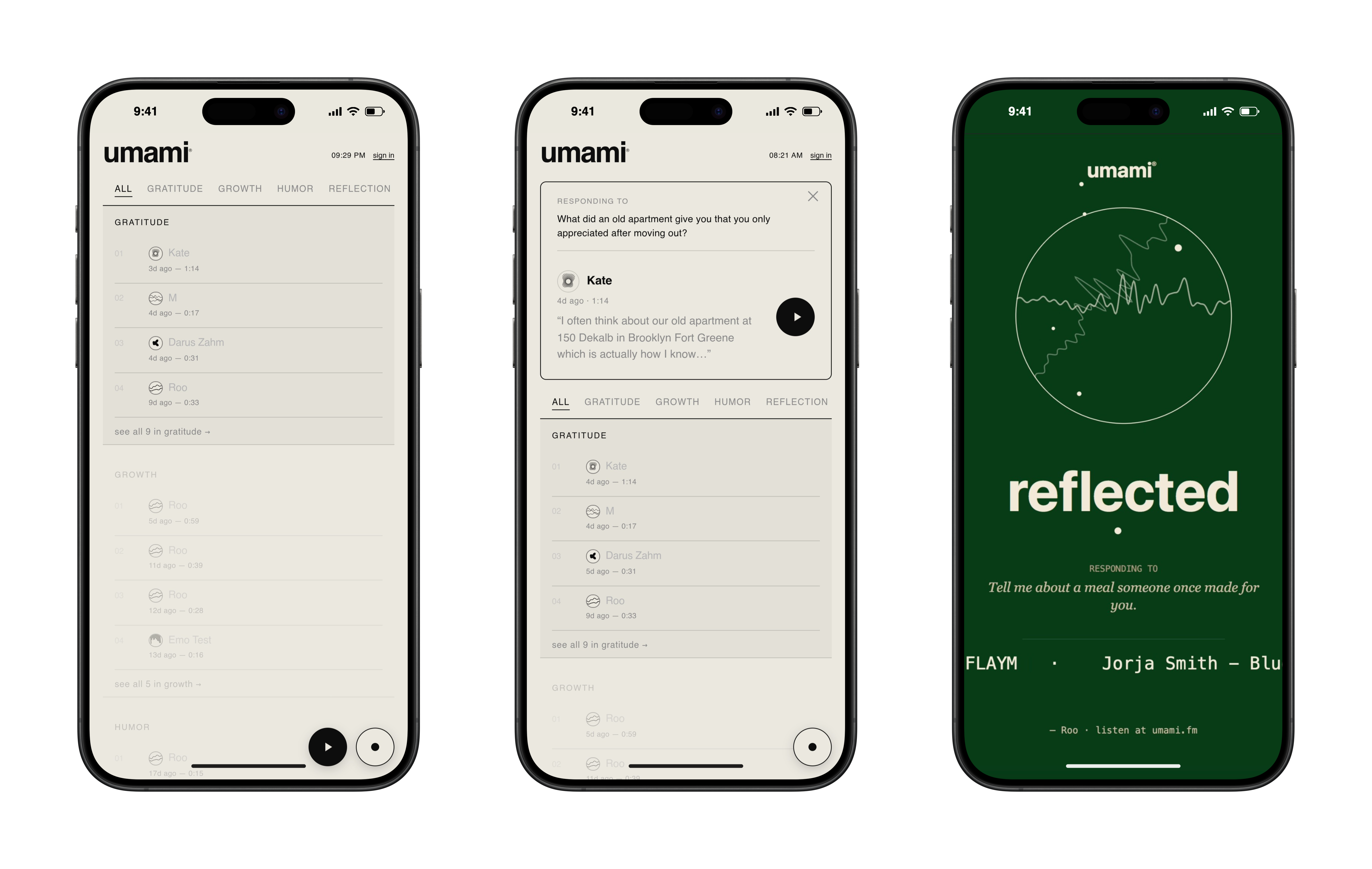
umami.fm is a public, voice-first journal. You record a short spoken note answering the day's prompt, drop it into a themed channel like gratitude, growth, or wonder, and it plays back over a soft music bed alongside everyone else's. It turns daily reflection into something you speak instead of write, like leaving a voicemail for anyone who wants to listen.
The resulting note sounds like a mini podcast. Your own notes can be exported into beautiful videos for social too - I was particularly pleased with how the voice visualiser turned out.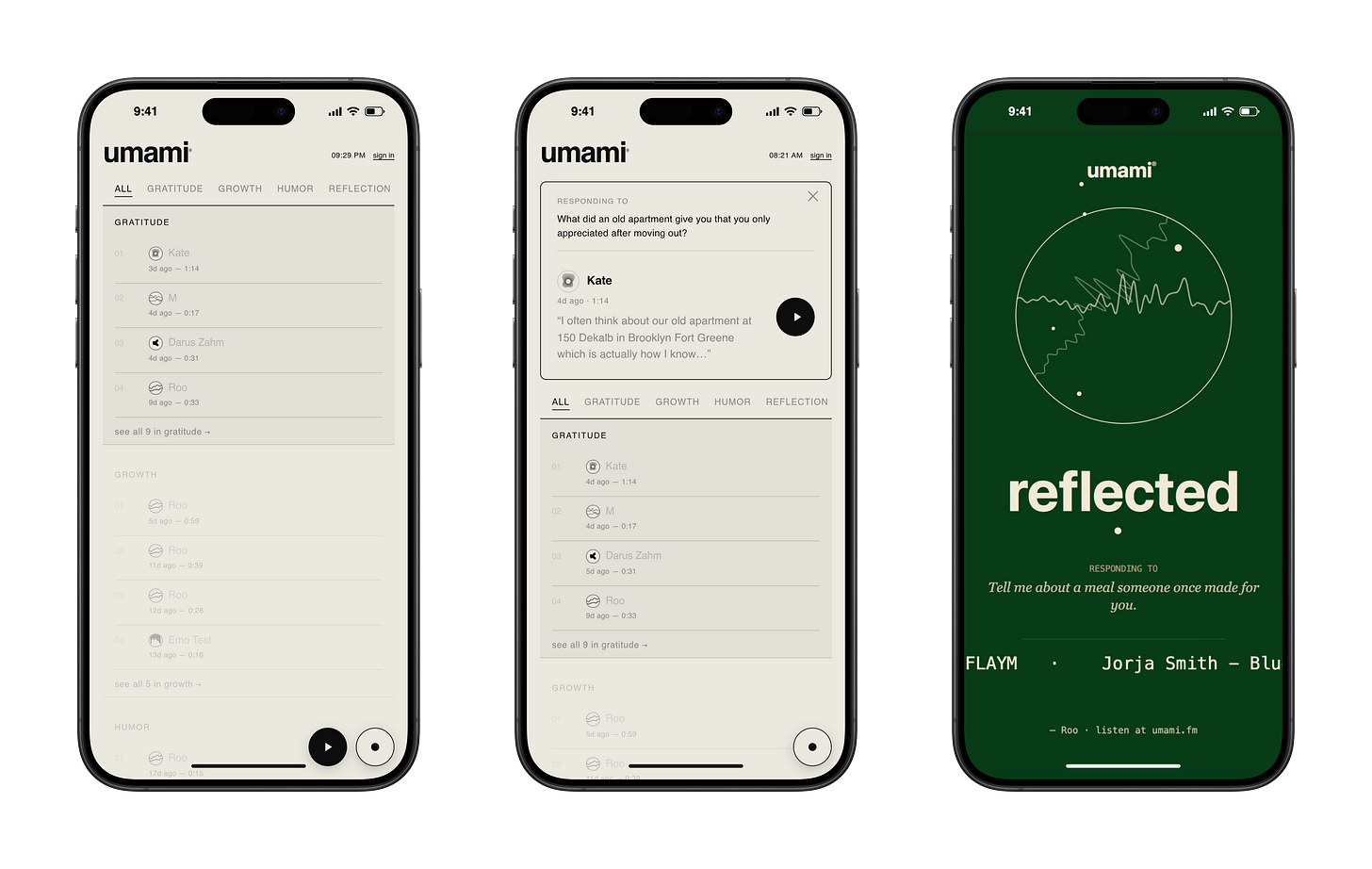
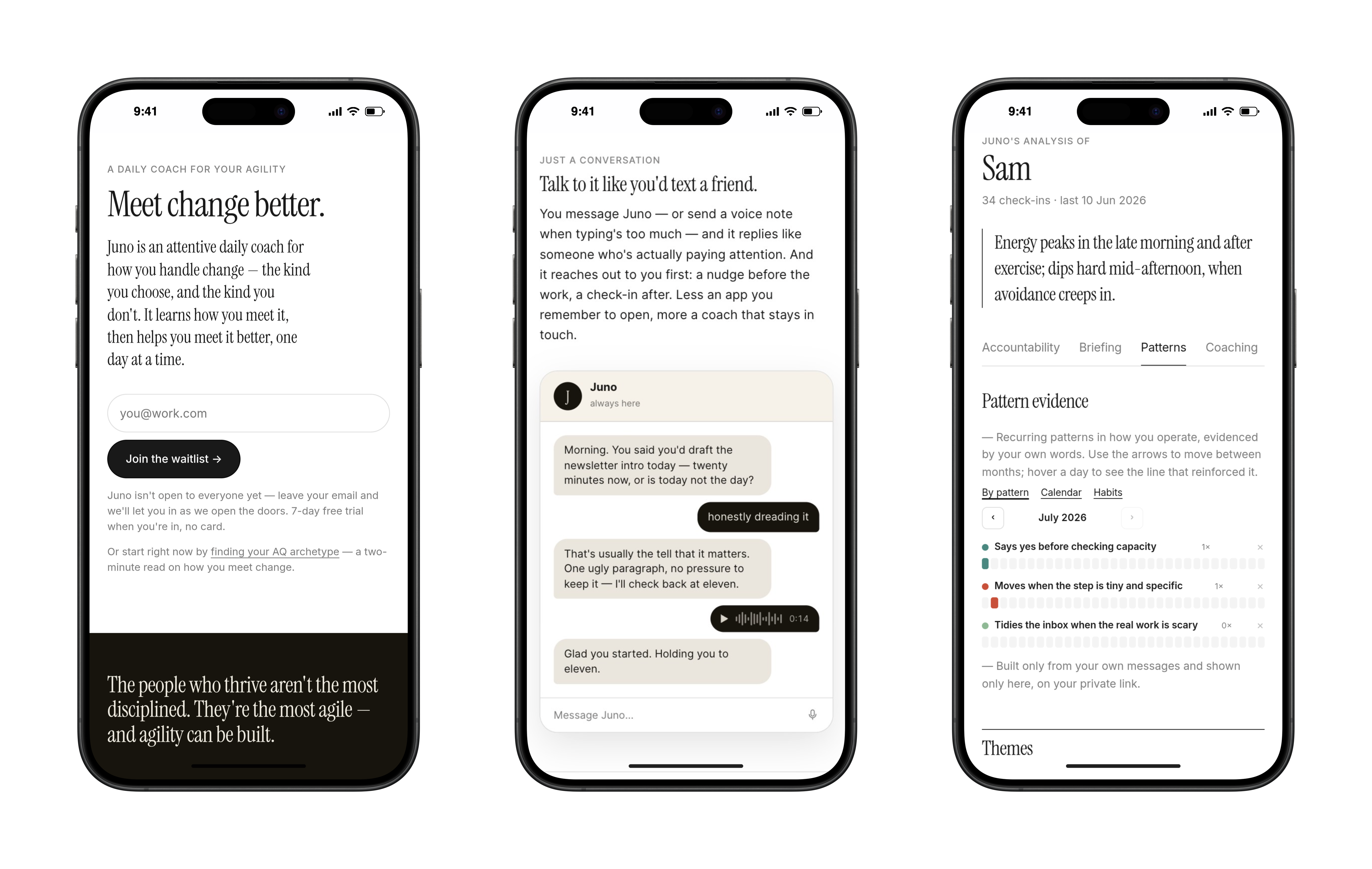
Juno is a proactive AI accountability coach you talk to through messages and voice. Its core mission is to connect people with themselves and prepare them to think with agility in a dramatically changing world. It builds you a dashboard that surfaces the patterns holding you back alongside your strengths, and sends a daily briefing with your priorities for growth and a personal letter celebrating your wins to keep your spirits up. It adapts its coaching to who you are, starting with AI to build your profile and aiming to connect you with a cohort of real people as you go. Originally I built this for myself but during a trip to NY I pitched it to a friend and I'm excited to now be building this with the amazing Liz Tran, an executive coach to founders and CEOs and author of AQ, whose Agility Quotient framework now shapes how Juno understands each person.
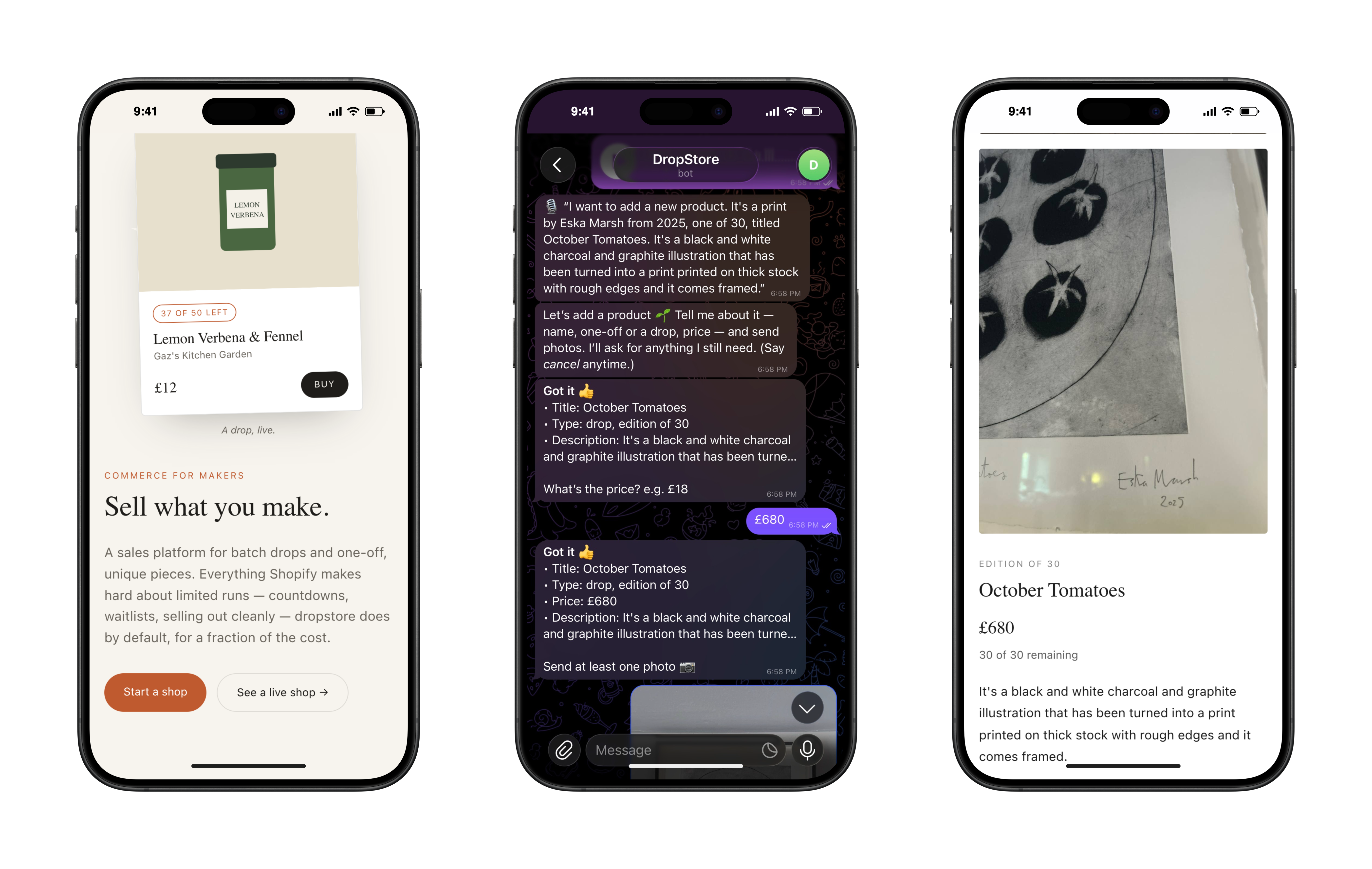
DropStoreNookshop is the newest and rawest of the three, a lightweight commerce platform built for one-off runs: a single furniture piece, an art piece, a limited drop, not an ever-refilling catalog. The whole store can be run from a Telegram bot. Add a product by sending a voice note and snapping a photo on your phone, no screens, no dashboard, no UI to fight with.
Somewhere in all this I’ve also been steadily rebuilding something internal; the thing thirty years of unfinished work wore down - my own belief that I could see something through. It’s coming back online, one finished thing at a time, and it’s genuinely changed how I feel about myself.

Unlike before, these days I build in the margins, in nap times and evenings and the odd stolen hour, because I’m the one doing most of the childcare for our 10 month old while my wife runs MØRNING / EVENING and launches a book.
I have less time than I’ve ever had, and I’m somehow making more than I ever did. So I’m reviving this Substack and treating it as a line in the sand. A new era, and for the first time in a while I’m finding myself with more to say.
If your wiring looks anything like mine, come with me. I’ve a strong feeling we’re only at the start of what people like us get to build.
This is wonderful Roo, thank you
Reading this was so uplifting, thank you Roo ✨